What we believe about AI.

Four positions we hold about AI in custom manufacturing, each with the reason behind it. The free AI Employee Handbook shows how to act on them.

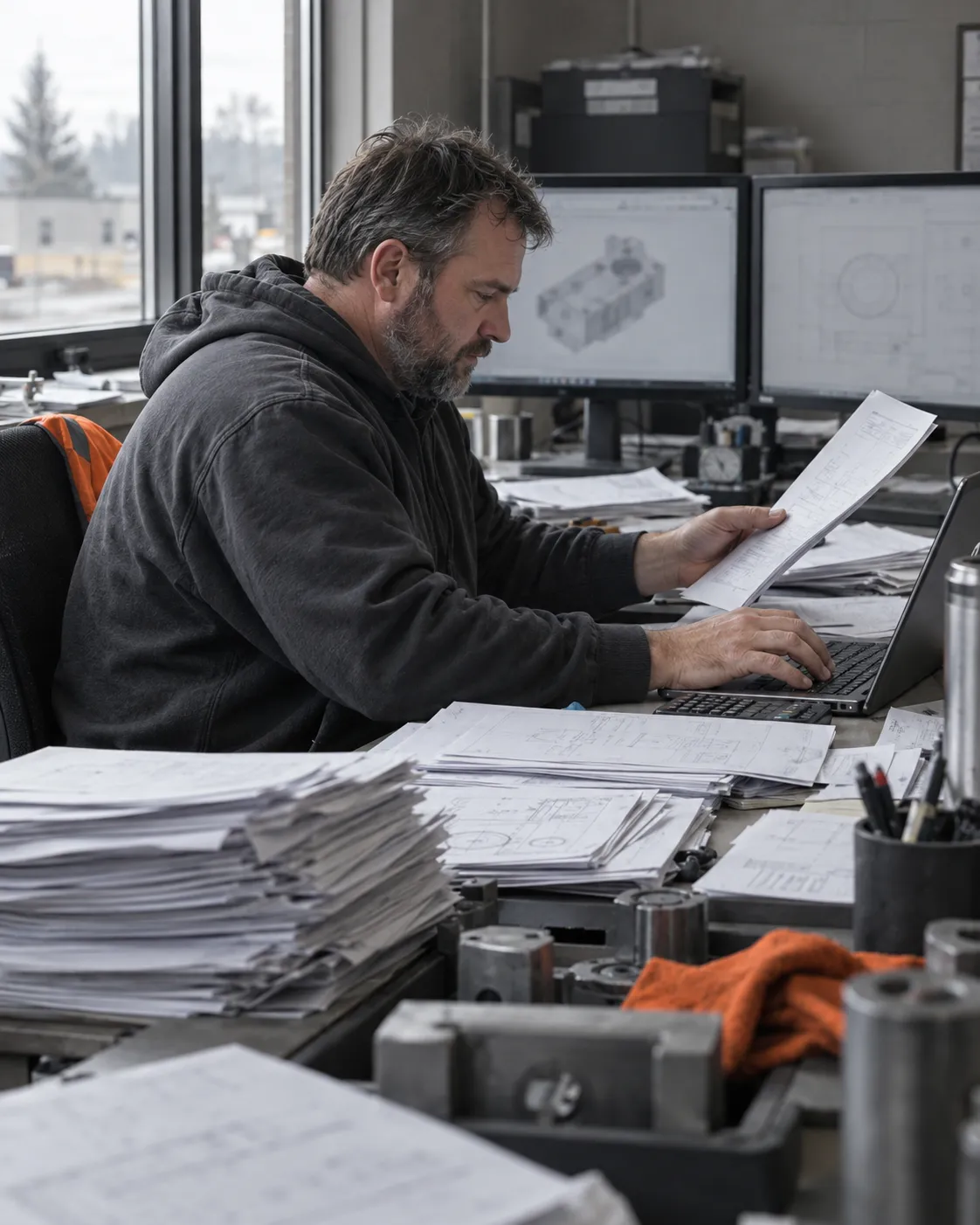
An estimator retyping numbers from a stack of printed RFQs

Much of the office work in manufacturing is people retyping between systems.

The estimator

Copies quantities, material, and notes from the RFQ and drawing into the estimate by hand.

The coordinator

Reads each email in the shared inbox, finds the job it belongs to, and passes it on.
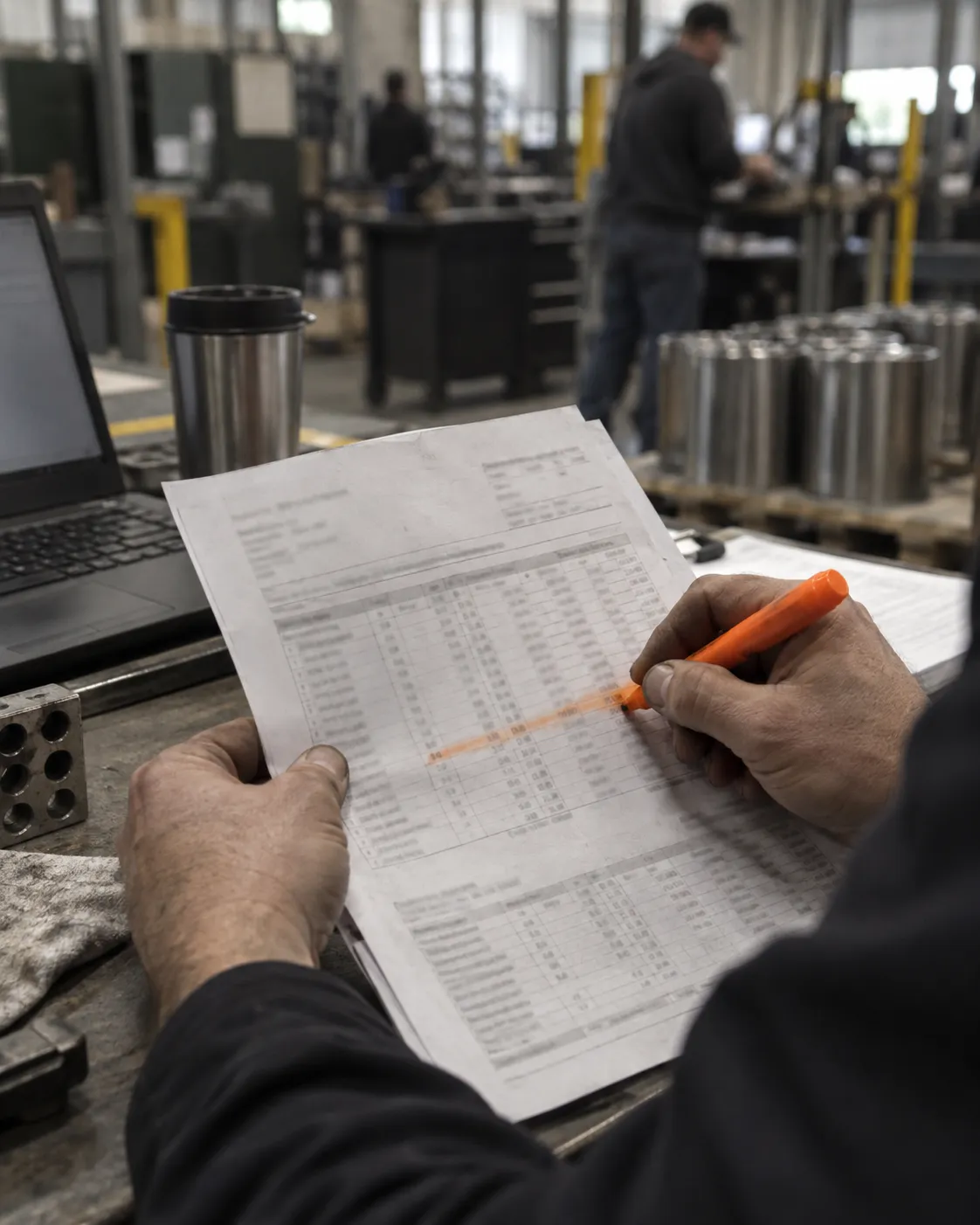
Hands highlighting values on a mill test report

AI can draft the paperwork. A person has to sign for it.

What it does well

Reads a drawing, an MTR, or a customer email and drafts the next document.

What it can't do

Know for certain when it is wrong. It can sound just as sure, so our systems flag what they are unsure of, and a person signs for the price or the shipment.

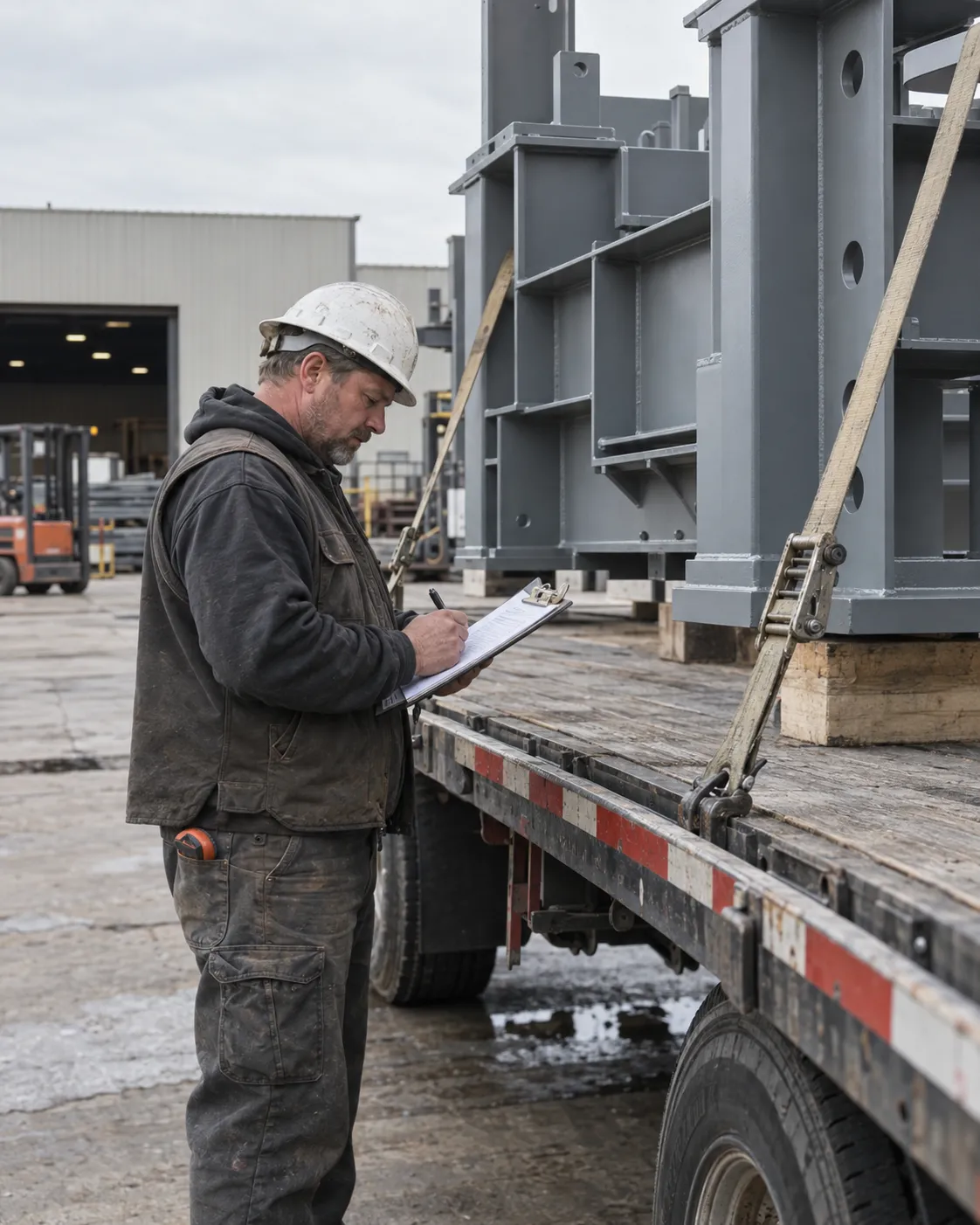
A foreman signing off a finished steel assembly on a trailer

AI should take the retyping, and people should keep the decisions.

AI prepares

Drafts the work and flags any value that does not match its source.

People decide

Check the draft against the source, handle the exceptions, then sign.

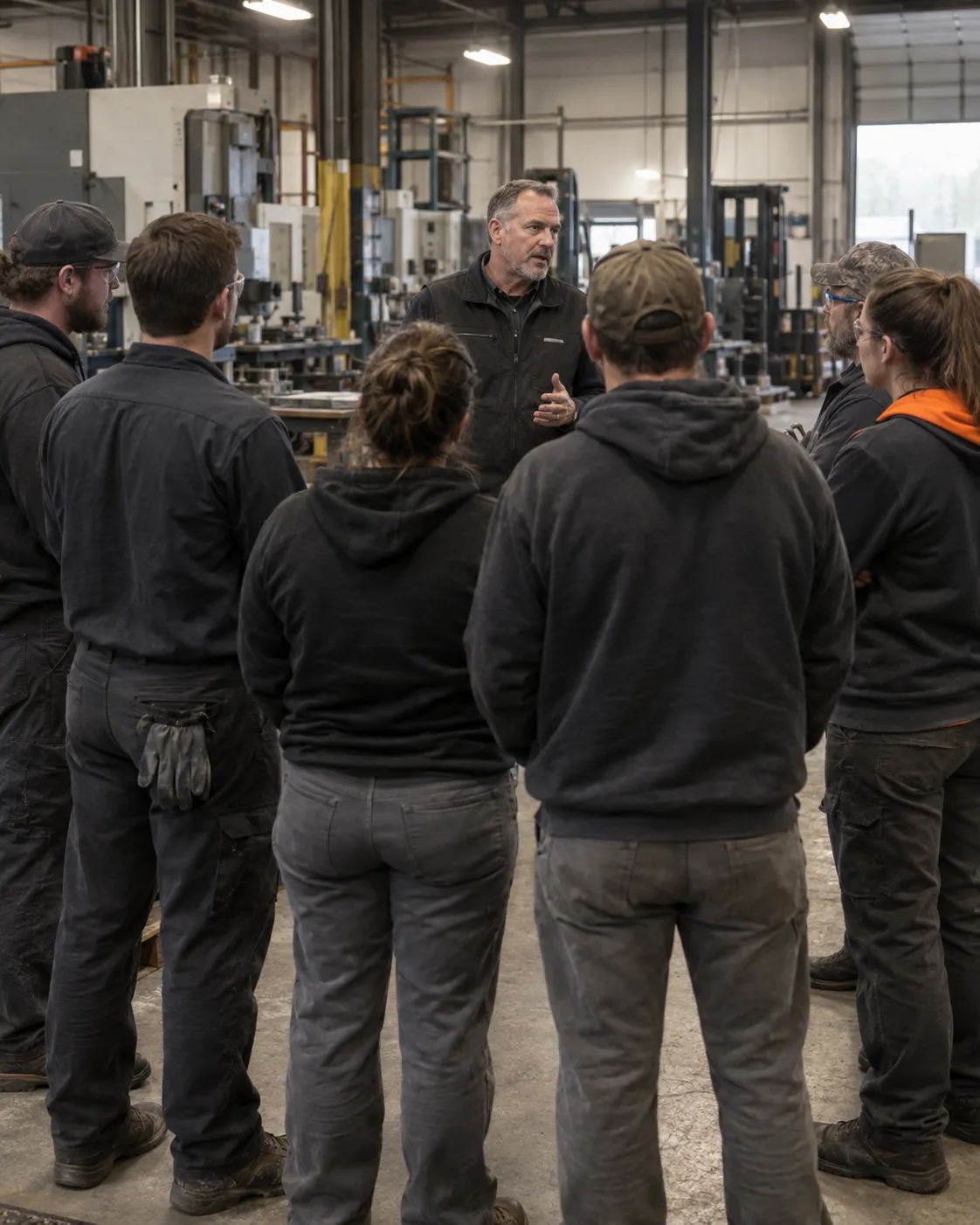
An owner talking with a small crew on the shop floor at shift start

AI projects stall unless leaders change how the work gets done.

Why projects stall

The tools change and the habits stay. In NAM's Q2 2026 survey, 41.43% of manufacturers said they give frontline workers no AI training (NAM, Q2 2026).

What we do about it

Every AI role gets a named manager and written rules for what it may do alone. We train the people who review its work.

AI does the first pass. People verify, decide, and sign.

The AI can sound just as sure when it is wrong, so a named person checks everything that ships, bills, or certifies. That one rule shapes the systems we build.

See where your team's hours go.

Start the Hidden Hours Scan

Free, about 3 minutes. It estimates the hours your team spends retyping, and your report shows on screen.